Editorial Cool Essay — Scroll-Reveal Long-Form Variant
A clinical, literary long-form essay where each paragraph dims to faint grey until scrolled through, fading character-by-character to full ink as the argument lands — pilots a performance-review critique but the pattern fits any structural-thesis essay that needs the reader to actually slow down.
Best for: Long-form B2B, HR, management, advisory, and strategy lessons where the gravity of the prose matters and the reader needs to be slowed down to actually absorb the argument.
Live preview — scroll inside the frame to see the full page.
What it does
- Character-by-character scroll reveal — every body paragraph starts dim and inks itself in one character at a time as the reader scrolls through it, mechanically slowing the reading speed
- Four-section essay structure — the page walks the reader through a portable rhetorical shape (Diagnosis → Why It Persists → The Move → Monday Morning) you can adapt to any structural-critique argument
- Pinned section indicator — a small fixed indicator updates with the section number and label as the reader passes through each one, giving a quiet sense of place without breaking the reading rhythm
- Pull-quotes, headlines, and byline at full ink throughout — they function as navigation landmarks inside an otherwise dim field, drawing the eye to the spine of the argument
- Take-it-Monday closing artifact — the essay ends with a screenshot-able takeaway block (a small calendar template plus three quotable scripts) clearly distinct from the body prose
- Reduced-motion fallback — readers who prefer less motion see the essay rendered at full ink immediately, no dimming applied, the lesson reads as a clean essay
- Accessibility-friendly DOM — all dimmed text is fully present in the page so screen readers and search engines see the complete prose at all times
Best use cases
- Management and leadership coaching essays — diagnoses of dysfunctional team dynamics, hard-conversation frameworks, what good leadership actually requires
- HR consulting and people-ops critiques — compensation systems, performance-management theory, hiring-process essays, retention diagnostics
- Organizational development and change-management essays — slow-reveal pacing matches the slow-reveal of organizational diagnosis
- Executive education and MBA-adjacent lessons — strategy essays, governance pieces, board-level case discussions
- Legal, financial, advisory, and clinical long-form analysis — sober, unhurried regulatory or ethical critiques
What you can change with your DNA
When you run this through the remix skill, your CCOS DNA — brand, voice, audience — drives these decisions automatically:
- Colors — Editorial Cool family palette is locked: cool grey paper, deep navy ink, muted steel, and a steel-blue accent. If you need a different temperature, pick a different family rather than retuning this one.
- Fonts — two roles, both locked to the Editorial Cool family: a display serif (with italic) for headlines and pull-quotes, and a clean sans for body text
- Copy — replace freely: opener (eyebrow, headline, deck, byline), four section headlines, four section bodies of three to five paragraphs each, one or more pull-quotes, the closing artifact (calendar plus three scripts), and the footer line. Section count flexes to three, four, or five.
- Images — none in the pilot by design — the page is text-as-art. If you add imagery, keep it monochrome editorial (single hero plate, photo-essay-style) so it doesn't fight the typography.
- Behavior — control how aggressively dim the starting state is (lower = more dramatic, higher = subtler), how fast the per-character reveal flows, and whether the section indicator is clickable for jump navigation
How remixing works
From "swiped it" to "shipped it" in three steps.
Pick a remix
Browse the library, find one that fits — like this one.
Run it through your DNA
The remix skill uses your CCOS DNA to swap colors, fonts, copy, and structure so it lands as yours.
Ship it
Paste the finished HTML into Thinkific, Kajabi, WordPress, or any platform that takes embed code.
 Featured
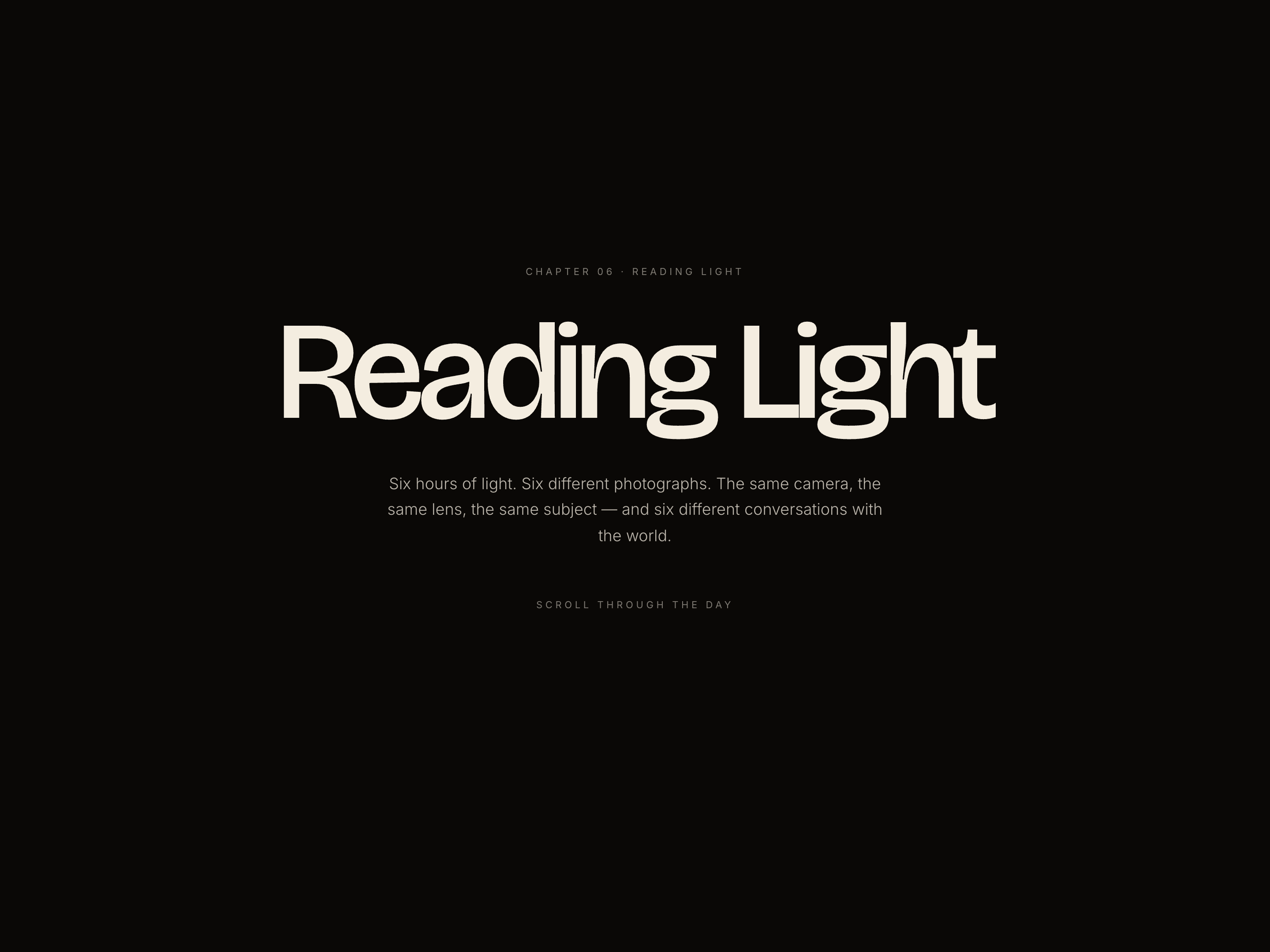
 Chapter Color-Shift Essay — Mood-Driven Long-Form Lesson
A long-form magazine-style lesson where the entire page palette transitions chapter by chapter to embody the topic — pilots six chapters of natural light but the pattern fits any 3–7 part lesson covering distinct conditions, moods, or states.
 Featured
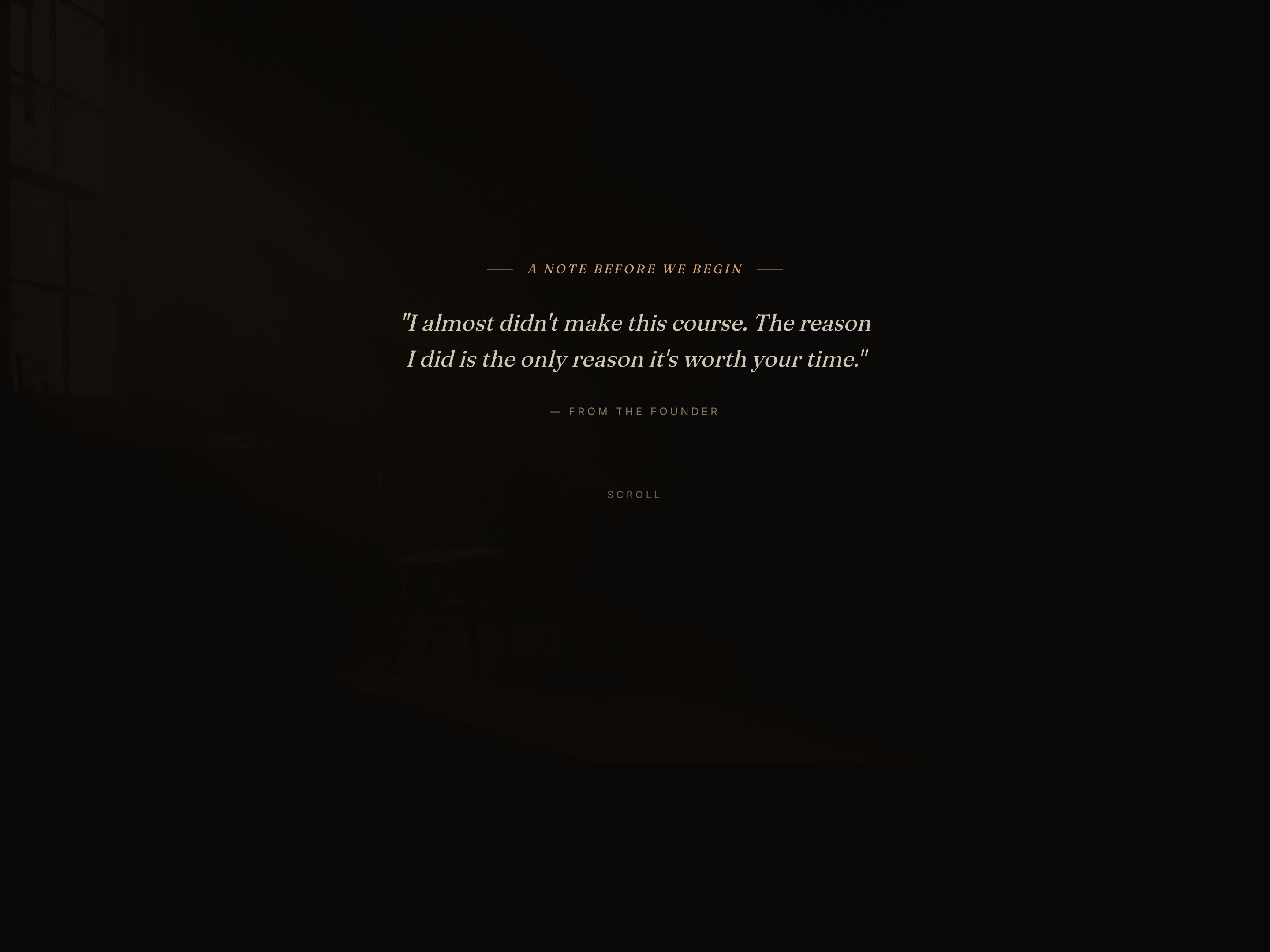
 Documentary Text-Mask Opener — Cinematic Founder Story
A documentary-style lesson opener where a giant headline fills with a warm gradient as the learner scrolls — pilots a vulnerable founder admission but the pattern fits any course intro, welcome page, or program kickoff that needs the emotional weight of a Netflix cold open.
Create a new list
Save your favorites
Email me a magic link and I'll add this to your favorites list.